 ExpressAgain
An emergency communication card for someone who can't speak
Paramedics ask questions fast: name, what happened, medicines, allergies. For a person who cannot answer, the answers need to be written down and spoken for them before anyone asks.
The ExpressAgain Team5 min read
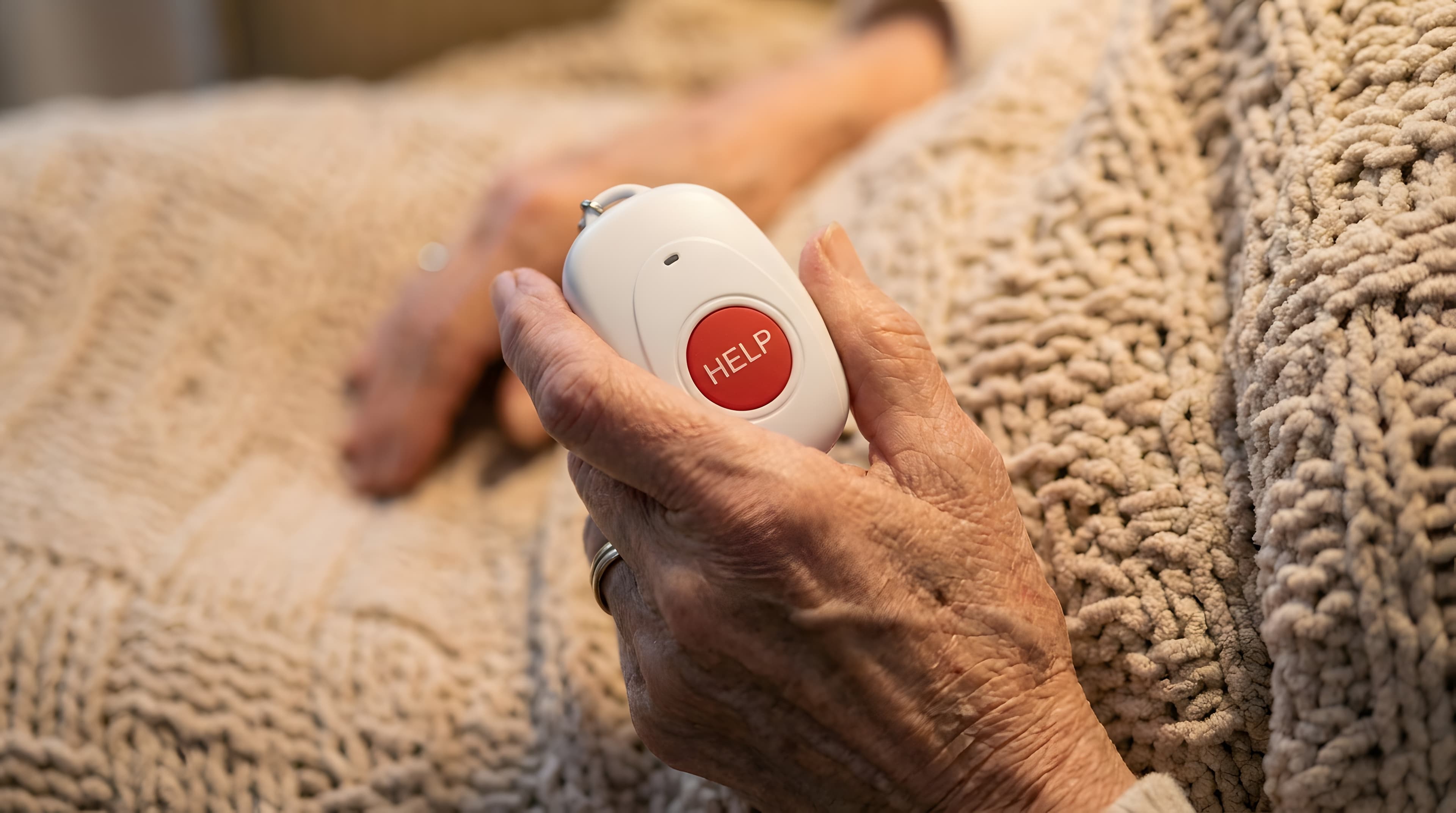
In an emergency, the people who arrive to help are working quickly, and they rely on answers. What is your name? What happened? Where does it hurt? What medicines do you take? Are you allergic to anything? A person with aphasia, a trach, advanced ALS or a breathing tube may understand every question and still be unable to answer one. Worse, a responder who gets no answer may assume the person is confused.
An emergency communication card closes that gap. It speaks for the person when they cannot, and it tells responders how to talk with them. This guide covers what to put on one, where to keep it, and how ExpressAgain carries the same information. If someone is in danger, call 911 first; nothing here replaces that.
What the card should say first
The most important line is the one that changes how responders treat the person. Something like: I can hear and understand you. I cannot speak. Please talk to me directly. Then how the person communicates: thumbs up for yes, a head shake for no, pointing, blinking, a letter board or an app. That one sentence turns a patient who seems unresponsive into a person who can take part in their own care.
What else to include
- Full name, date of birth and the address where the person lives.
- The condition that affects speech, in plain words (aphasia after a stroke, a laryngectomy, ALS), and other conditions that matter in an emergency.
- Current medicines and allergies, with the date the list was last checked.
- Devices: a trach, a feeding tube, a pacemaker, a BiPAP, a hearing aid.
- Emergency contacts, and the primary doctor's name and phone number.
- Where important papers are kept, such as advance directives, so the family can bring them.
Keep it short enough to read in a minute. A card that runs to four pages will not be read in the back of an ambulance. Put a copy where responders look (by the front door or on the refrigerator is common), one in the person's bag or wallet, and one with each person who helps with care.
Keep it current
Cards go wrong the same way medication lists do: at the transitions. A hospital stay, a new specialist or a changed dose makes an old card dangerous. Set a rule that whoever updates the medication list updates the card the same day, and put the date on it.
Practice before you need it
A card works best when the people around the person already know it exists. Show it to everyone in the family who helps, the neighbor who has a key and any home care professional on their first shift. Practice the yes and no signals with the person so they are automatic under stress. When responders arrive, one person should hand over the card, say in a sentence how the person communicates, and then step back so responders speak to the patient directly. If the person goes to the hospital, the card goes with them, and so does whatever device they use to communicate, with its charger.
The Emergency Plan Card in ExpressAgain
ExpressAgain keeps the home-health agency's Patient Emergency Plan Identification Card in the app: demographics, qualifying conditions, the evacuation plan and the rest of the paper card's fields. Caregiver-role accounts keep it up to date, every clinical login on the care team reads it, and one button prints it. Because the medication list and allergies live in Prescriptions, they are typed once and are the same everywhere. The Emergency Plan Card help article has the details.
One piece is honestly still waiting: the wallet Medical ID, which reads this card for a Show big screen and a wallet-size print, appears only once Doctor's Records is switched on. Until then the page says Not set up yet, so keep a printed card in the wallet for now.
Phrases that speak in the moment
A card answers questions. In the moment, the person also needs to say things: I can't breathe, the pain is in my chest, call my daughter. The Emergency page in ExpressAgain is the last link in the menu, in red, on every screen. It has a Get Help Now band, emergency phrases spoken with one tap, pain and body location, critical medical information and the emergency contacts. Every page with a side rail carries the SOS card, where I need help now speaks I need help. Please come now. This is an emergency.
The guided setup also saves the person's name and date of birth as two pinned phrases, because hospitals ask for them constantly. With one tap, the person answers the two questions everyone asks first. For the hospital days that follow, our guide to communicating with a patient on a breathing tube goes further.
A quick note
If someone is in immediate danger, call 911 or your local emergency number. ExpressAgain helps a person communicate; it is not an emergency service or medical advice. Ask the care team what belongs on the emergency card for the person's own conditions.
Frequently asked questions
What should an emergency card for a nonverbal person say?
Lead with how to talk with the person: I can hear and understand you, I cannot speak, and how they say yes and no. Then name, date of birth, conditions, medicines, allergies, devices, contacts and the doctor.
Where should we keep the card?
Where responders look, such as by the front door or on the refrigerator, plus a copy in the person's wallet or bag and one with each person who helps with care.
Does ExpressAgain call 911 for us?
No. 911 is always one tap away on the Emergency page, and the emergency phrases speak for the person, but calling for help is up to the people in the room.
Is the wallet Medical ID available?
Not yet. It appears once Doctor's Records is switched on, which waits on vendor approvals. The Emergency Plan Card prints today.
Try ExpressAgain
Help someone you love be heard again.
Communicating is never behind a paywall: tap to speak, the phrase library, the sentence builder, Letters and the emergency screen are on the Free plan.